.jpg)
Dancing as Medicine
Natasha Ramlall
5-6 minute read
Before I ever learned about emotions or healing, my body already knew.
I was eight years old, dancing in my parents’ basement to Thriller, when the pleasure of my free movement suddenly shifted into uncontrollable, wordless tears.
I remember feeling confused, but unable to stop.
My mother found me there and simply said, “Sometimes we just need to cry.”
And after several more minutes, I was finished.
I think about that moment often.
As a grown woman who facilitates dance not for performance but for feeling, I understand what was happening that day. And I see the wisdom in my mother’s words.
My body was doing what bodies are meant to do. It moved, it released, it cleared space. Dancing without an agenda had brought me to a raw and emotional place. It stirred something buried deep inside me, and my tears were simply my body’s way of letting it move through.
Not strange at all. Just profoundly human.
Embodied dance is a way to reckon with the emotional landscape of life. It invites self-understanding, intimacy with the felt sense of the body and awareness of the balance between the masculine and feminine energies that guide how we meet the world.
Of course, it took me a few decades to understand it that way.
My journey back to embodied dance was anything but straightforward. Like most things that greatly impact us, it unfolded through tension and struggle.
The Pursuit of Perfection
My mother first signed me up for dance lessons when I was four after realizing it was all I ever wanted to do. For the next twelve years, I lived inside studios, stretching, practising, performing, being examined… always chasing some idea of perfection.
But something never felt right.
The world of dance, as I knew it, seemed inaccessible and far removed from the bliss I wanted it to be. There didn’t seem to be space for the kind of dancing that felt like me.
The truly painful part was loving something so deeply and still feeling like it didn’t belong to me.
By sixteen, I could see that training was actually contributing to my low self-esteem. And so, with a heavy heart, I made the decision to walk away.
Searching for What Was Lost
Over the years, I tried to feed my love of dance in other ways. I went to bars, clubs and live music shows, hoping to lose myself in movement again. But those spaces, soaked in alcohol, attention and noise, changed the experience of it.
It was performance of a different nature.
Once I became a mother, dancing mostly happened in fragments. A few spins in the kitchen, a playful twirl with my kids. Rarely, if ever, with full abandon.
I watched dance shows on television, admiring the grace and skill of others, and felt that familiar ache in my chest. How had something that once felt like my everything slipped so far from my story?
I tried adult dance classes, hoping to reconnect, but the focus on choreography never touched the place inside me that was still waiting to be moved. I also noticed how self-conscious I had become, how restricted my movements had grown.
For a time, Zumba became my happy place. But even then, if I am honest, it never brought me back to the primal freedom and emotional release that once left eight-year-old me sobbing on the carpet.
Dance as Medicine
Then, in my mid-forties, a sacred turning point arrived which changed my relationship with dance forever.
At a time when I was open to ways of deepening my work in mind-body health, dance found its way back to me. It returned through the emerging field of somatic and therapeutic movement, flowing into my life as naturally as breath.
I began to see the potential of dance as medicine for our disconnection from the body. It wove itself into my work with such ease that I knew I was being guided.
After a year of training and steady dedication to my vision, I created my own version of an embodied dance practice. And then the real gifts showed up.
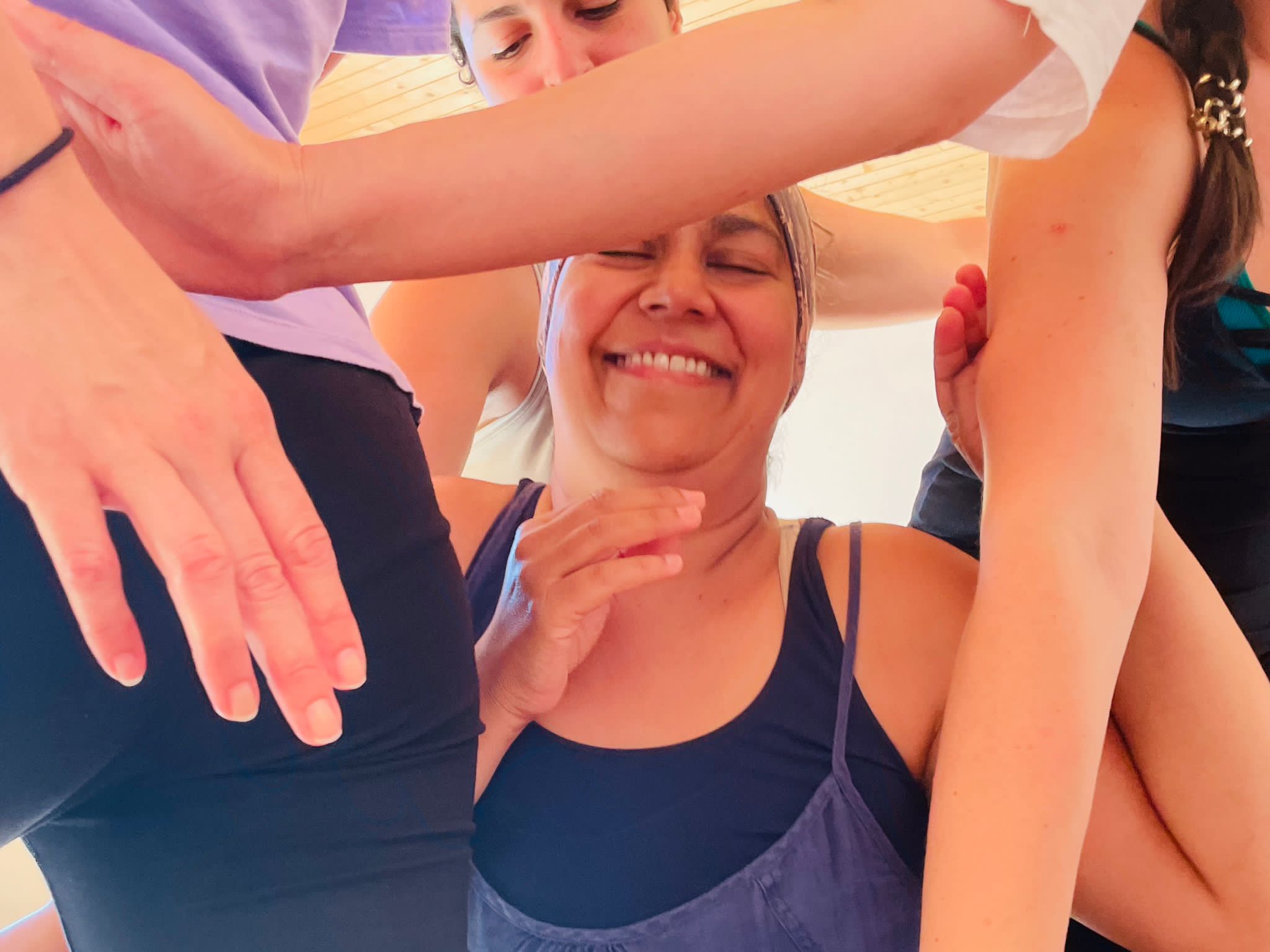
Stretching myself beyond my comfort zone, I began offering classes to groups of women in my town and planted the seed for a beautiful community to grow. It was the sweetest expression of vibrancy and truth I could imagine, born from a quiet calling in my soul.
I was eight years old, dancing in my parents’ basement to Thriller, when the pleasure of my free movement suddenly shifted into uncontrollable, wordless tears.
I remember feeling confused, but unable to stop.
My mother found me there and simply said, “Sometimes we just need to cry.”
And after several more minutes, I was finished.
I think about that moment often.
As a grown woman who facilitates dance not for performance but for feeling, I understand what was happening that day. And I see the wisdom in my mother’s words.
My body was doing what bodies are meant to do. It moved, it released, it cleared space. Dancing without an agenda had brought me to a raw and emotional place. It stirred something buried deep inside me, and my tears were simply my body’s way of letting it move through.
Not strange at all. Just profoundly human.
Embodied dance is a way to reckon with the emotional landscape of life. It invites self-understanding, intimacy with the felt sense of the body and awareness of the balance between the masculine and feminine energies that guide how we meet the world.
Of course, it took me a few decades to understand it that way.
My journey back to embodied dance was anything but straightforward. Like most things that greatly impact us, it unfolded through tension and struggle.
The Pursuit of Perfection
My mother first signed me up for dance lessons when I was four after realizing it was all I ever wanted to do. For the next twelve years, I lived inside studios, stretching, practising, performing, being examined… always chasing some idea of perfection.
But something never felt right.
The world of dance, as I knew it, seemed inaccessible and far removed from the bliss I wanted it to be. There didn’t seem to be space for the kind of dancing that felt like me.
The truly painful part was loving something so deeply and still feeling like it didn’t belong to me.
By sixteen, I could see that training was actually contributing to my low self-esteem. And so, with a heavy heart, I made the decision to walk away.
Searching for What Was Lost
Over the years, I tried to feed my love of dance in other ways. I went to bars, clubs and live music shows, hoping to lose myself in movement again. But those spaces, soaked in alcohol, attention and noise, changed the experience of it.
It was performance of a different nature.
Once I became a mother, dancing mostly happened in fragments. A few spins in the kitchen, a playful twirl with my kids. Rarely, if ever, with full abandon.
I watched dance shows on television, admiring the grace and skill of others, and felt that familiar ache in my chest. How had something that once felt like my everything slipped so far from my story?
I tried adult dance classes, hoping to reconnect, but the focus on choreography never touched the place inside me that was still waiting to be moved. I also noticed how self-conscious I had become, how restricted my movements had grown.
For a time, Zumba became my happy place. But even then, if I am honest, it never brought me back to the primal freedom and emotional release that once left eight-year-old me sobbing on the carpet.
Dance as Medicine
Then, in my mid-forties, a sacred turning point arrived which changed my relationship with dance forever.
At a time when I was open to ways of deepening my work in mind-body health, dance found its way back to me. It returned through the emerging field of somatic and therapeutic movement, flowing into my life as naturally as breath.
I began to see the potential of dance as medicine for our disconnection from the body. It wove itself into my work with such ease that I knew I was being guided.
After a year of training and steady dedication to my vision, I created my own version of an embodied dance practice. And then the real gifts showed up.
Stretching myself beyond my comfort zone, I began offering classes to groups of women in my town and planted the seed for a beautiful community to grow. It was the sweetest expression of vibrancy and truth I could imagine, born from a quiet calling in my soul.
Reclaiming the Real Meaning of Dance
Dance had been part of my original blueprint all along. I just never enjoyed performing it for others.
I came to see that years of formal training had quietly devalued my natural love of free movement, simply by the messages it reinforced.
I wasn’t a real dancer.
Real dance was for performance.
Real dance was about choreography.
Dancing for pure joy and feeling was fun, but it didn’t really mean anything.
It was a powerful shift to realize that dance holds immense value even when it’s done only for our own pleasure.
I still adore dance as a performance art and hold deep admiration for those who dedicate themselves to mastery, artistry and the gift of connecting with an audience.
But also that’s not the whole of dance.
Singing the Same Song
A few years later, with embodied dance now a regular part of my life, I find myself exploring another art form through this expanded lens.
I loved singing from a very young age too, until lessons turned it into something to perfect and perform. Much like dance, it began to feel like a world where I did not belong.
Now I see that I can let go of the performance piece and reclaim singing as a human birthright, a natural expression of aliveness. I can love it simply for what it stirs in me, just as I do with dance.
Recently, I began joining community song circles and learning to bring song and chant into the groups I facilitate. It’s clear to me that humans have a need to be expressing and creating art—not solely consuming the artistic expression of others.
Returning to Self
I am finally at peace calling myself a dancer. I am also a singer. I no longer feel the need to qualify these identities.
The privilege of returning to soul-aligned practices, free from expectations of how they should be done, leaves me wondering:
What else might I welcome into my experience if I choose to challenge the world’s limited definitions?
I invite you to ask yourself the same question.
Dance had been part of my original blueprint all along. I just never enjoyed performing it for others.
I came to see that years of formal training had quietly devalued my natural love of free movement, simply by the messages it reinforced.
I wasn’t a real dancer.
Real dance was for performance.
Real dance was about choreography.
Dancing for pure joy and feeling was fun, but it didn’t really mean anything.
It was a powerful shift to realize that dance holds immense value even when it’s done only for our own pleasure.
I still adore dance as a performance art and hold deep admiration for those who dedicate themselves to mastery, artistry and the gift of connecting with an audience.
But also that’s not the whole of dance.
Singing the Same Song
A few years later, with embodied dance now a regular part of my life, I find myself exploring another art form through this expanded lens.
I loved singing from a very young age too, until lessons turned it into something to perfect and perform. Much like dance, it began to feel like a world where I did not belong.
Now I see that I can let go of the performance piece and reclaim singing as a human birthright, a natural expression of aliveness. I can love it simply for what it stirs in me, just as I do with dance.
Recently, I began joining community song circles and learning to bring song and chant into the groups I facilitate. It’s clear to me that humans have a need to be expressing and creating art—not solely consuming the artistic expression of others.
Returning to Self
I am finally at peace calling myself a dancer. I am also a singer. I no longer feel the need to qualify these identities.
The privilege of returning to soul-aligned practices, free from expectations of how they should be done, leaves me wondering:
What else might I welcome into my experience if I choose to challenge the world’s limited definitions?
I invite you to ask yourself the same question.